

A Complete Guide
Engagement photos are more than just pretty pictures—they capture the emotion, excitement, and anticipation of the journey ahead. Traditional poses offer a mix of elegance, intimacy, and connection. They tend to be classic, flattering, and timeless, which means years from now, when you look back, these photos still feel special.
Here are some of the most popular traditional poses, some variations, how to prepare, and tips to make the photos feel natural rather than forced.
Most Loved Traditional Poses
| Pose / Type | How It Works | Why It’s Timeless |
| The Walk Toward / Walking Pose | Hold hands, walk slowly toward (or away from) the camera. Look at each other or the camera. | Adds movement, easy to relax into, produces natural expressions. |
| Close Embrace / Classic Hug | One wraps arms around the other’s waist or shoulder. Lean in, heads together. | Shows intimacy, comfort, love. It’s subtle but very expressive. |
| Forehead to Forehead / Touching Foreheads | Stand face to face, gently touch foreheads. Close eyes or look down. | Romantic, vulnerable, very soft and emotional. |
| The Dip / Twirl / Dance Moves | One partner holds the other in a dip, or they twirl / spin / dance gently. | Adds drama, movement, joy. Great for showing personality. |
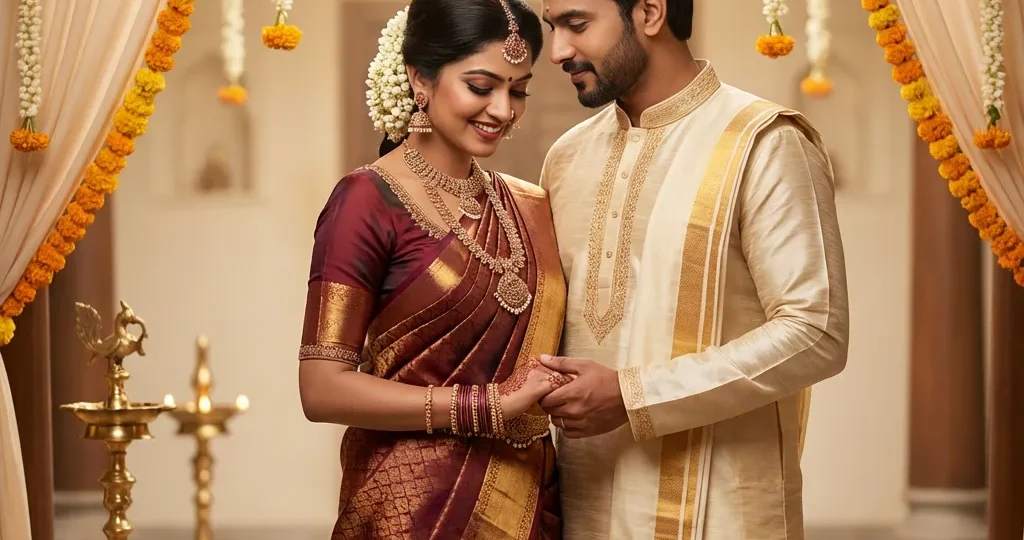
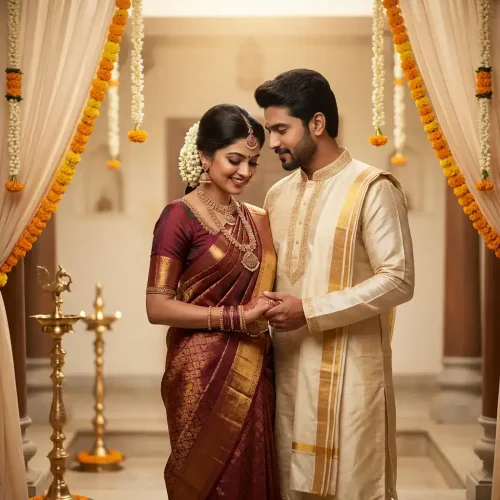
| Hand on Chest / Ring Focus | One partner places hand (with engagement ring) on chest of the other; ring hand is clearly displayed. | Highlights the significance of the moment, shows off the ring, adds detail. |
| Side by Side Linked Arms / Shoulder Lean | Stand next to each other, maybe linked arms; one leans head on the other’s shoulder or back. | Comfortable, classic, less formal but still elegant. |
| Seated Snuggle | Sit together (on bench, stairs, ground, etc.), one leaning on the other, heads touching or looking off into distance. | Relaxed, cozy, shows closeness in a more grounded pose. |
| Over-the-Shoulder / Glance Back | One partner looks back toward the camera; the other looks at them or at the camera. | Adds elegance and a little “cinematic” flair. |
Variations and Combinations
To avoid having every photo look the same, photographers often combine or vary these poses:
- Start with something formal / posed (e.g. side by side, looking at camera), then transition into more relaxed or intimate poses (walks, embraces).
- Use props or environment: stairs, trees, paths, benches, doorways, or a scenic landscape to frame the couple.
- Include movement: spinning, walking, dancing, or even lifting. Movement helps loosen up stiffness.
Tips to Make the Traditional Poses Feel Natural
Even with classic poses, photos can feel stiff if you don’t relax. Here are practical tips:
- Choose a Good Photographer:
Someone who understands traditional portraiture and can help with guiding poses. You’ll feel less self-conscious if your photographer is warm, gives direction, and helps you flow from one pose to another. - Practice Small Moves Beforehand:
Try a few poses at home or in front of a mirror. Know how you like to stand, where your hands go, what expressions feel natural. - Relaxation Tricks:
Take a few deep breaths before photos.
Focus on your partner, not the camera. A whispered joke, laugh, or memory can shift your expression.
Keep shoulders down and avoid tensing your face or jaw. - Mind the Lighting:
Early morning or golden hour (just before sunset) gives soft, flattering light. Midday sun tends to cast harsh shadows. - Consider the Location & Outfits:
Traditional poses show off not just the couple but also the setting. Choose locations that match the aesthetic you want. Coordinate your outfits: complementary but not too matchy-matchy. Texture, layers, and color contrast help. - Include Close-Up & Wide Shots: You’ll want some intimate portraits (face, ring, expressions) and photos that include the environment. Mix both for a richer album.
Sample Sequence of Poses (Flow of a Session)
Here’s how a photographer might sequence a shoot using these traditional poses, so the session builds naturally:
- Start with formal / posed: side by side, looking at camera; maybe hand on chest.
- Move to close embrace: hug, forehead touches.
- Introduce movement: walk together, maybe laugh or spin.
- Use seated or leaning poses.
- Add more dramatic ones like the dip or twirl.
- End with something meaningful or playful to both—whatever feels true to you (e.g. a throwback pose, favourite spot, or fun element).
Possible Pitfalls & How to Avoid Them
| Pitfall | Why It Happens | How to Avoid |
| Stiff / awkward posture | Nervousness, first time being photographed, trying too hard | Use movement, shift weight, talk, laugh. Don’t freeze. |
| Forced smiles or expressions | Trying to “look perfect” rather than being genuine | Think of something funny; interact with partner; let photos catch the in-between moments. |
| Poses that don’t suit your body / personality | Trying something because it looks good in someone else’s photos | Choose what you feel comfortable with; modify poses to your height, build, style. |
| Harsh lighting or unflattering angles | Poor time of day, no direction | Schedule shoot during golden hour; listen to photographer’s suggestions. |
Why Traditional Still Matters
Even though “trendy” photos are everywhere, traditional poses have staying power because:
- They capture the relationship without being overly stylized.
- They are usually flattering for most body types and can be adapted.
- They look good across different mediums: prints, invitations, albums, social media.
- They anchor your photo set: the moments between, the candid ones, feel more striking when balanced with something classic.
Traditional poses are those that are classic, less stylized, often symmetrical or balanced, and with minimal novelty gimmicks. Think face-to-face, side by side, embracing, hand positioning that highlights the partner rather than props or unnatural extensions.
You don’t need dozens. Planning 6-8 solid traditional poses, then allowing for variations and candid shots works well. The photographer can help transition between them so the shoot flows.
That’s very common. Choose simpler, less exposed poses (side-by-side, holding hands, leaning). Use prompts or activities (walk, tell a story, whisper) to relax. The more comfortable you are, the more natural the photos.
Yes — ring shots are a traditional staple. They can be subtle (hand on shoulder, ring hand visible) or more focal (close-up on hand). Just make sure lighting and angle show the ring clearly without harsh shadows.
Not at all. They remain popular because they provide timeless, emotional, and elegant photos. Trends may come and go, but having some traditional shots ensures that your photo collection stays classic.
Hands are something many couples worry about. Some suggestions:
One hand around partner’s waist/shoulder.
One hand in pocket (groom), or gently placed.
Hands linked / interlocked.
Hands touching ring, or subtle touches (cheek, face).
