

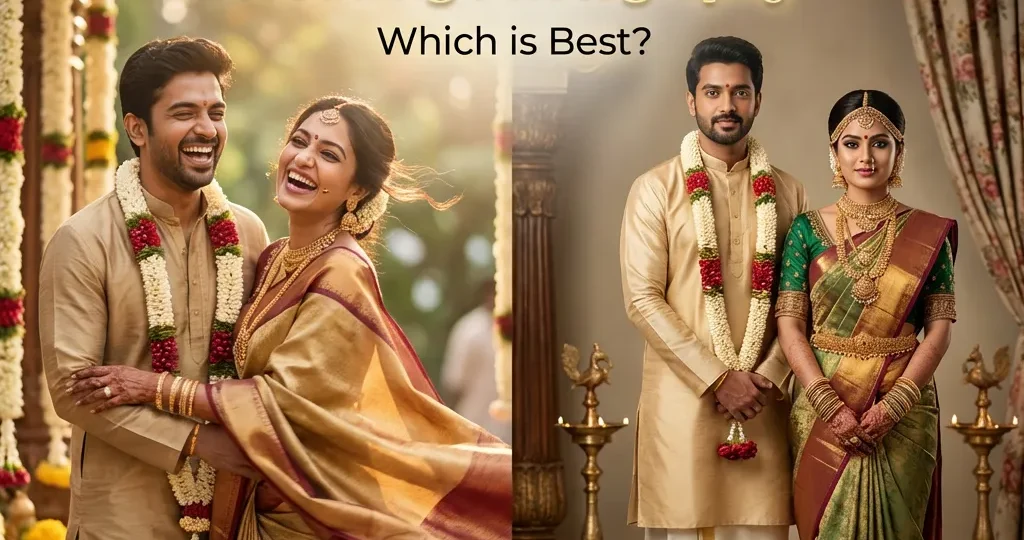
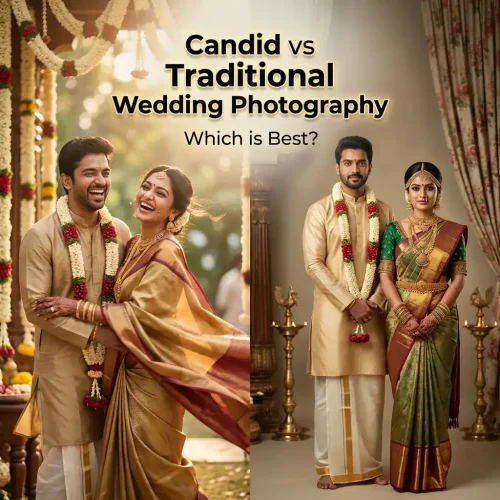
Weddings are among the most cherished milestones in life, and capturing those moments in the best way possible is every couple’s dream. In today’s wedding photography world, two popular styles dominate the scene: candid wedding photography and traditional wedding photography. Both styles have their own charm, approach, and value. While one focuses on natural, unposed emotions, the other highlights detailed rituals and family-oriented group shots.
So, which is best for your wedding? Let’s explore both in depth to help you make the right decision.
Understanding Candid Wedding Photography
Candid wedding photography is all about capturing natural, unposed moments. The photographer stays mostly in the background, observing and documenting emotions as they unfold. From a tear in the bride’s eye to a laugh shared between friends, candid photography emphasizes storytelling.
KEY FEATURES OF CANDID PHOTOGRAPHY:
- Spontaneous shots without posing.
- Focus on emotions, reactions, and natural expressions.
- Artistic frames that highlight the beauty of the moment.
- Minimal interruption from the photographer.
Works well for couples who prefer relaxed and modern photography styles.
Understanding Traditional Wedding Photography
Traditional wedding photography, on the other hand, follows a structured and formal approach. Here, the photographer takes charge of positioning couples, families, and guests to ensure clear, detailed, and complete coverage of the wedding rituals.
KEY FEATURES OF TRADITIONAL PHOTOGRAPHY:
- Posed portraits with the couple, family, and guests.
- Coverage of every ritual step-by-step.
- Group photographs for extended families.
- Clear framing and lighting with a formal touch.
Focus on ensuring no person or ritual is left undocumented.
Candid vs Traditional Wedding Photography: A Comparison
| Aspect | Candid Photography | Traditional Photography |
|---|---|---|
| Approach | Natural, unposed, spontaneous. | Structured, posed, and formal. |
| Focus | Emotions, storytelling, creativity | |
| Flexibility | More experimental and artistic. | Strictly follows the event schedule. |
| Family Preference | Younger couples often love it. | Elders prefer its inclusivity. |
| Final Output | More cinematic and vibrant. | Clear, detailed, and timeless. |
| Coverage | May miss some guests or rituals. | Ensures everyone and everything is covered. |
Advantages of Candid Photography
- Captures Emotions Naturally:
Candid photos showcase genuine emotions like laughter, tears, and surprise. - Creative Storytelling:
The photos often look cinematic, giving a modern and stylish touch to wedding albums. - Minimal Interruption
Couples and guests can enjoy the event without frequent instructions to pose.
Advantages of Traditional Photography
- Complete Documentation:
No ritual, person, or guest is missed. It ensures full coverage of the event. - Family-Oriented:
Group photos and portraits are highly valued by families and elders. - Timeless Appeal:
Posed and clear photographs remain classic and easy to revisit even decades later.
Which is Best for Your Wedding?
The answer depends on your expectations and preferences:
- Choose Candid Photography if:
You want your wedding album to feel natural, emotional, and cinematic. It works best for couples who love creativity and storytelling. - Choose Traditional Photography if:
You want detailed documentation of every ritual, guest, and family group photo. It suits couples with larger families and those who value cultural richness. - Best Option: A Combination:
Many couples today prefer combining both styles. Candid photography adds depth and storytelling, while traditional photography ensures inclusivity and full coverage. Together, they create a perfect balance between emotions and tradition.
Tips for Choosing the Right Style
- Set Your Priorities:
Decide whether you value emotions, rituals, or both equally. - Discuss with Your Photographer
Share your expectations clearly, whether you prefer candid, traditional, or a mix. - Check Portfolios:
Review the photographer’s past work to understand their expertise in both styles. - Budget Considerations:
Candid photography often requires more creativity and specialized skills, making it costlier than traditional. Balance both based on your budget. - Venue and Lighting:
If your wedding venue has dramatic lighting and décor, candid photography can enhance it. Traditional photography, however, ensures clarity even in low-light settings.
Conclusion
The debate between candid and traditional wedding photography does not have a single winner. Both styles serve different purposes and add unique value to your wedding album. Candid photography captures raw emotions and artistic frames, while traditional photography ensures rituals, families, and group moments are preserved with clarity.
For most couples, the ideal choice is a blend of both—where candid shots tell the emotional story of the day, and traditional photos safeguard the cultural essence and family memories. This combination ensures your wedding album is both timeless and heartfelt.
Candid photography captures natural, unposed moments, while traditional photography focuses on structured, posed, and ritual-centric shots.
Candid photography is generally more expensive as it requires skilled photographers, creative techniques, and advanced editing.
Not always. Candid photography focuses more on moments than complete coverage, which may result in some guests not being photographed.
They may appear more formal, but with an experienced photographer, even traditional photos can look elegant and visually appealing.
Some studios offer combined packages with separate teams for candid and traditional photography. This is a good option if you want both styles fully covered.
Families, especially elders, often prefer traditional photography because it includes group photos and rituals in detail. Couples, however, may lean towards candid for its modern touch.
